Kofifi was a thriving place of light and dark, of hopes and dreams, and ultimately of thwarted lives and loss. And writer, journalist and philosopher Can Themba, fitted right in.
Daniel Canodoise Themba, who was born in Pretoria’s Marabastad on 21 June 1924, was a charismatic writer bursting with talent in a country that went out of its way to destroy people like him.
Sophiatown was Themba’s muse. In his short piece Requiem for Sophiatown he wrote: “Somewhere here, and among a thousand more individualistic things, is the magic of Sophiatown. It is different and itself. You don’t just find your place here, you make it and you find yourself. There’s a tang about it.”
Before it was systematically destroyed by the apartheid government and its inhabitants dispersed in 1955, it was a township unlike any other in South Africa: a creative centre for writers, artists, musicians and most of all, thought. Kofifi, described in Requiem for Sophiatown, was “swarming, cacophonous, strutting, brawling, vibrating life … But it was not all just shebeeny, smutty, illegal stuff. Some places it was as dreams are made on.”
Themba studied at the University of Fort Hare, receiving an English degree (first class) and a teaching diploma before moving to Kofifi. It was here that he entered a short story competition run by Drum magazine, winning it.
He subsequently went to work at the magazine, which focussed on showing the atrocities of the apartheid system, becoming part of the legendary group of writers and photographers – Bloke Modisane, Todd Matshikiza, Stan Motjuwadi, Casey Motsisi, Lewis Nkosi, Nat Nakasa and Henry Nxumalo – who all lived by the dictum “Live fast, die young and have a good-looking corpse.”
The House of Truth
On any given night you could listen to discussions taking place in Themba’s home at 111 Ray Street – The House of Truth, as he called it; catch Dolly Radebe or Miriam Makeba singing at the local jazz club; or find solace at the bottom of a glass at one of the many shebeens.
At the time Themba was writing, Sophiatown was one of the few places in South Africa where black and white owned land side-by-side.
Topics in The House of Truth ranged far and wide: “Our subjects are legion, Nkrumah must be a hell of a guy, or is he just bluffing? What about our African intellectuals who leave the country just when we need them most? But is it honestly true that we don’t want to have affairs with white girls? … In fact, all those cheeky questions that never get aired in public.” Again, from Requiem for Sophiatown.
Despondent and frustrated by the apartheid system, Themba was provoked into going into exile in Swaziland in 1963, where he found work as a teacher.
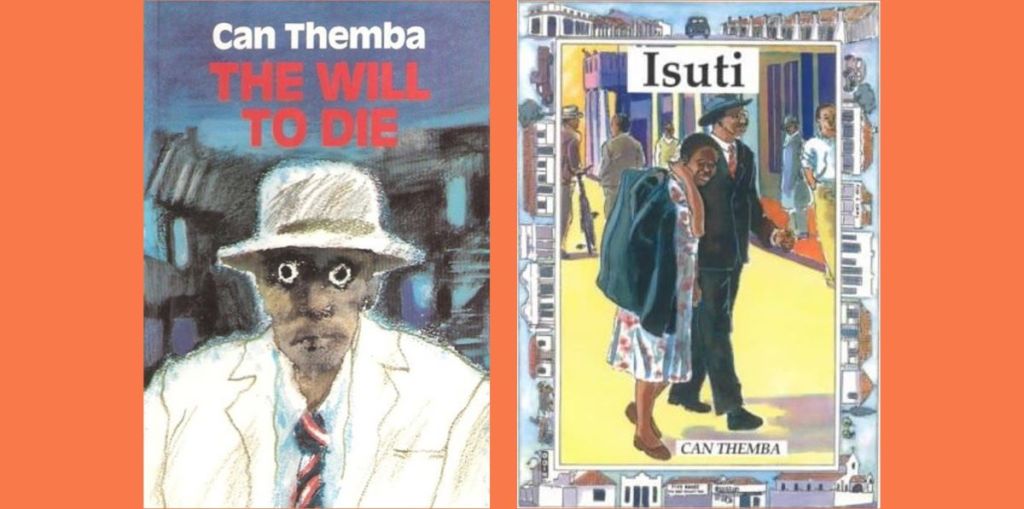
In 1966 he was declared a “communist” and his work was banned by the South African government, which meant he was not allowed to be published or quoted in print. It was only two decades later that much of his writing became available in the land of his birth, despite The Will to Die being published in 1972.
Another anthology, The World of Can Themba, was published in 1985.
He is perhaps best known for his short story The Suit, a seemingly simple story of how a man cruelly deals with the affair of his wife. It is a study in ego and the ugly lengths people may go to punish those they believe hurt them. The Suit has been turned into several stage productions and translated into French.
Themba died in Manzini on 8 September 1967, a lonely, lost genius.


Leave a Reply