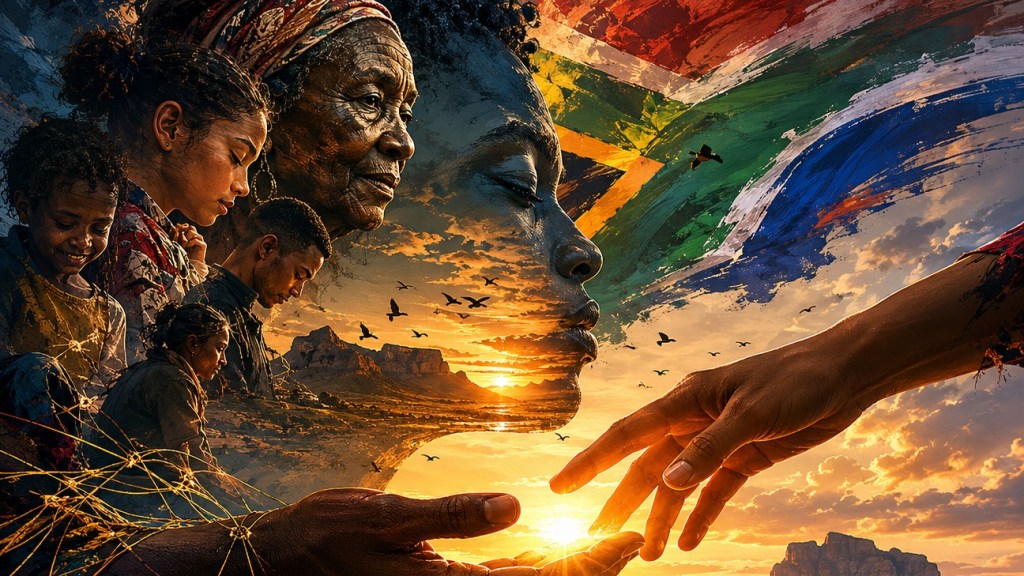
This week, I found myself sitting for hours in a packed public hospital waiting room. The queue barely moved. Plastic chairs scraped on the floor, babies cried somewhere in the distance, and every few minutes someone would sigh loudly and ask, “Who’s the last one in the line?” It was the kind of scene that perfectly captures so much of modern South Africa – overcrowded systems, tired people, frustration hanging in the air.
And yet, somehow, it became one of the warmest rooms I had sat in for a long time.
An elderly woman next to me started joking about how the queue needed its own ward number. A young man across from us joined in, laughing that at this rate we would all know each other’s family history before seeing a doctor. Soon people who had arrived as strangers were sharing snacks, holding places in line for one another and talking about life – children, work, politics, football, rising food prices. There was frustration, yes, but there was also humour, kindness and connection.
I sat there thinking: this country should not still feel this alive after everything it has been through.
There are easier countries to live in than South Africa.
Countries where the lights stay on, trains arrive when they should, governments work efficiently and daily life feels predictable. Places where people do not constantly carry the low hum of uncertainty in the background of their lives. South Africa is not one of those places. Living here can be frustrating, exhausting and, at times, deeply disheartening.
And yet, despite everything, South Africa still sings to the soul.
There is something about this country that gets under your skin. It is difficult to explain to people who have never experienced it properly. South Africa is not simply a place you live in; it becomes part of you. It lives in the sounds, the humour, the contradictions, the warmth of its people and the strange beauty of how life continues here against all odds.
This is a country that feels alive in a way few others do.
You hear it in the noise of a taxi rank at rush hour. In the laughter around a braai long after the meat is finished. In the sound of gospel music drifting through the streets on a Sunday morning. In the easy way strangers still greet one another, still stop to talk, still find ways to connect even in difficult times.
South Africans have every reason to become cold and cynical. Crime, corruption, unemployment and political failure have tested people endlessly. For years, the country has lurched from one crisis to another. There are communities still waiting for the promises democracy was supposed to deliver. There are young people who feel forgotten. There are families carrying the weight of rising costs, broken systems and constant uncertainty.
But somehow, people keep going.
That is what makes South Africa remarkable. The resilience here is not loud or dramatic most of the time. It is ordinary. It is the street vendor opening up before sunrise. The teacher still trying to inspire children in overcrowded classrooms. The nurse working another impossible shift. The grandmother raising an entire household on a pension. South Africans survive things that would drain hope from many other societies.
And yet there is still laughter.
That laughter matters.
South Africans joke about everything – politics, load shedding, traffic, rugby losses, even their own struggles. Sometimes humour is the only thing holding people together. It is not denial; it is survival. There is a uniquely South African ability to find light even in dark moments, to complain bitterly one minute and laugh uncontrollably the next.
Maybe that is why the country stays with people who leave.
Many South Africans move abroad searching for safety, stability and opportunity, and often they find it. But many also discover an ache they did not expect. They miss the energy of home. They miss hearing different languages flowing into one another in a single conversation. They miss the thunderstorms rolling across the highveld. They miss the smell of rain on dry earth. They miss the emotional texture of life here.
Because South Africa is never emotionally flat.
It can break your heart one day and restore your faith in people the next. There are moments of terrible disappointment, but also moments of extraordinary humanity. During times of crisis, ordinary people often step in where institutions fail. Neighbours help neighbours. Communities organise themselves. Strangers show kindness in ways that rarely make headlines.
There is also the beauty of this place – not just the landscapes, though they are breathtaking. The mountains, coastlines, bushveld and open skies feel almost unfairly beautiful at times. But the deeper beauty is in the people themselves. South Africa contains so many histories, cultures, languages and identities somehow existing together in one complicated national story.
It is messy. It is unfinished. But it is deeply human.
Perhaps that is the real reason South Africa still sings to the soul. Not because it is perfect, but because it feels real. There is no polished performance here. The country carries its scars openly. Its pain is visible, but so is its warmth, creativity and spirit.
South Africa asks something emotional of the people who live here. It demands patience, endurance and hope, even when hope feels unreasonable. And somehow millions of people still choose to believe in the possibility of something better.
That belief may be fragile at times, but it remains.
And maybe that is the song people hear when they think of South Africa – not a song of perfection, but one of resilience. A song carried by ordinary people who continue to love this country even when it frustrates them, disappoints them and tests them endlessly.
Against all logic, South Africa still has soul.
And despite everything, it still sings.
 Jenn Writes
Leave a comment