The lists of “100 Authors to Read Before Graduation” and the “50 Classics All School Learners Should Read” I came across recently compel me to reply to those who compile them.
There is something faintly absurd about a list called “The 100 Greatest Authors of All Time” that contains 20 or 30 writers from Britain and the United States, a generous representation from Europe and Russia, and then a handful of writers from the rest of the planet.
There is something amiss with the selection.
It is not that Shakespeare, Tolstoy, Austen, Dostoevsky, Dickens, Proust, Joyce or Woolf do not deserve their places. They plainly do. The problem is that a list presented as a guide to the world’s greatest literature often turns out to be a guide to a particular Western literary tradition.
Literature is not a Western invention.
People have been telling stories, writing poetry, recording history and imagining other worlds for thousands of years. Some of the oldest surviving literature comes from Mesopotamia, Egypt, India and China. Japan produced The Tale of Genji more than a thousand years ago. India has literary traditions in dozens of languages. China has one of the world’s deepest literary histories. The Arab world has produced writers, poets and thinkers whose influence stretches across centuries.
And Africa, despite the persistent idea that its literature somehow began with colonialism, has an extraordinarily rich tradition of storytelling, poetry, history, philosophy, praise poetry and religious writing, alongside its modern literature.
So why do supposedly global lists remain so heavily weighted towards Europe and the English-speaking world?
History has something to do with it. So do publishing, education, translation and simple familiarity.
A writer who is taught at major universities, published by international houses, translated into English, reviewed in influential newspapers and placed on school and university reading lists has a considerable advantage over a writer whose work remains largely in Bengali, Yoruba, Arabic, Sesotho, Japanese, Amharic or Xitsonga.
Translation matters. A writer cannot become part of a global literary conversation if readers outside the original language cannot encounter the work. And the languages most readily translated into English are not necessarily those that contain the best literature.
Africa makes the problem particularly obvious.
Take Chinua Achebe. Things Fall Apart is not important simply because it is an African novel. It is one of the major novels of the twentieth century. Its account of colonialism and the disruption of Igbo society has been read across the world and has influenced generations of writers.
Yet Achebe is still often introduced as an “important African writer”, as though being African is the most useful thing to say about him. Why not simply call him an important writer?
Ngũgĩ wa Thiong’o belongs in any serious discussion of twentieth-century literature. The River Between, A Grain of Wheat, Petals of Blood and Devil on the Cross are major works. His writing about language, colonialism and cultural power has also had an influence far beyond fiction.
Wole Soyinka became the first African recipient of the Nobel Prize in Literature in 1986. Naguib Mahfouz followed in 1988, Nadine Gordimer in 1991, JM Coetzee in 2003 and Abdulrazak Gurnah in 2021.
The Nobel prizes are not, of course, a definitive measure of literary greatness. But five African laureates should at least make it difficult to argue that the continent has made only a marginal contribution to world literature.
And those five names represent only a fraction of the African literary tradition.
Bessie Head’s A Question of Power is a remarkable novel of identity, exile and psychological distress. Buchi Emecheta wrote with great force about women, migration, motherhood and power. Mariama Bâ’s So Long a Letter is a short but powerful examination of marriage, gender and social expectations. Ayi Kwei Armah’s The Beautyful Ones Are Not Yet Born remains a striking study of corruption and disillusionment. Ousmane Sembène was both a major novelist and an important filmmaker.
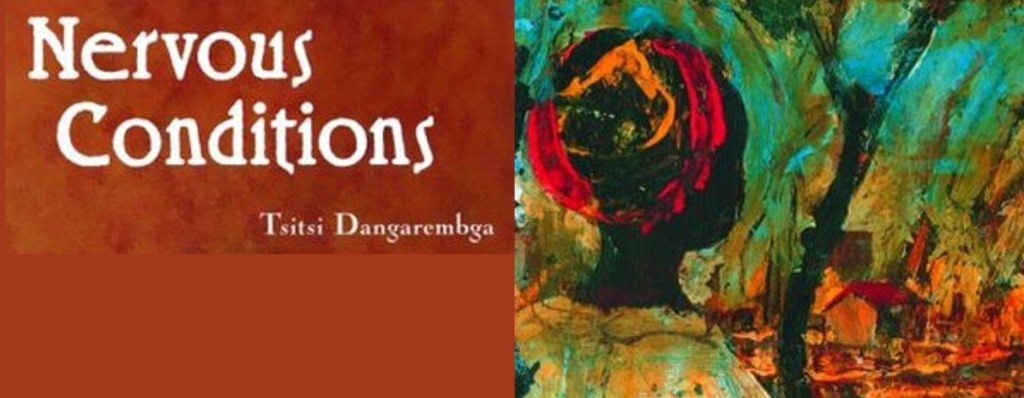
Tsitsi Dangarembga’s Nervous Conditions is one of the important novels to emerge from postcolonial Africa, examining gender, education, class and colonialism through the experience of a young Zimbabwean woman.
Then there are Amos Tutuola, Flora Nwapa, Kofi Awoonor, Dambudzo Marechera, Mia Couto, Assia Djebar, Nuruddin Farah, Ben Okri, Aminata Sow Fall, Sony Labou Tansi and many others.
They should not be added to literary lists simply to make those lists look more diverse. They should be there because their work deserves to be read.
The same argument applies to Asia.
Rabindranath Tagore won the Nobel Prize in Literature in 1913 and wrote poetry, novels, short stories, plays and essays. His influence on Bengali literature was enormous, but his ideas about culture, nationalism and the relationship between societies also gave him a genuinely international reach.
Murasaki Shikibu’s The Tale of Genji, written in Japan around the beginning of the eleventh century, is one of the earliest works to which the description “novel” is routinely applied. Lu Xun was central to the development of modern Chinese literature. Saadat Hasan Manto’s stories about Partition are among the most powerful writing to emerge from the trauma of the Indian subcontinent. Mahasweta Devi brought fiction into close contact with poverty, caste, gender and political power. Nawal El Saadawi challenged deeply rooted ideas about women and society in Egypt.
There are many others.
Australia provides another reminder of how narrow the conventional canon can be. Patrick White is the obvious name, but Australian literature also includes Christina Stead, David Malouf, Les Murray and Alexis Wright. Wright’s work, rooted in Indigenous Australian experience, brings histories and perspectives that were largely absent from the literature through which Australia was traditionally represented.
The issue is not a shortage of good writing. It is the narrow range of writing that has been allowed to become internationally familiar.
There are historical reasons for this. European empires spread their languages and institutions across much of the world. British and American universities became powerful arbiters of literary taste. Publishing houses in London, New York and Paris acquired international reach. Critics, prizes and academic curricula reinforced particular ideas about what constituted “great literature”.
The effects have lasted. A writer from London can become part of an international conversation simply by writing in English. A writer from Kenya, Senegal, India or Japan may first have to be translated before many international readers even know the work exists.
That creates a curious problem. We sometimes mistake familiarity for universality.
We read Shakespeare generation after generation partly because Shakespeare is a great writer, and partly because generations of teachers, universities, publishers and critics have made sure that we continue to read him. Both things are true.
This is not an argument for throwing the Western canon out. There would be little point in replacing one narrow list with another. The answer is to apply the same standards to writers from everywhere.
Has the work changed literature? Is it original? Has it influenced other writers? Does it continue to speak to readers? Has it changed the way people understand their society, their history or themselves?
Those questions can be asked of Tolstoy and Achebe, Woolf and Dangarembga, Dostoevsky and Manto, Joyce and Ngũgĩ, García Márquez and Mahfouz, Austen and Mariama Bâ.
A narrow canon can also distort our idea of what literature is supposed to be.
African writers, for example, have drawn on oral storytelling, communal memory, indigenous knowledge, colonial history and several languages at once. That has produced forms of fiction and poetry that do not always fit neatly into the traditions established by European literature.
Africa is not one literary tradition. It is a continent of 54 countries and hundreds of languages, with its own national, regional and linguistic traditions. The same is true, on a different scale, of Asia.
That variety is precisely what makes world literature interesting.
A literary canon should not be a monument. It should be a conversation, and conversations change. New translations appear. Writers once ignored are rediscovered. Readers encounter unfamiliar traditions. Writers influence one another across borders.
A novel written in Nigeria can change how an American writer thinks about fiction. A Japanese novel can alter an English reader’s understanding of narrative. An Indian poet can say something about human experience that a European literary tradition has failed to articulate.
That is one of the great pleasures of reading outside the familiar canon.
So, keep Shakespeare on the list. Keep Tolstoy, Austen, Dostoevsky, Woolf, Joyce, Dickens, Proust, Faulkner and García Márquez.
But put Achebe alongside them. Read Ngũgĩ and Soyinka. Read Mahfouz, Gordimer and Gurnah. Read Bessie Head, Buchi Emecheta, Mariama Bâ, Ousmane Sembène and Tsitsi Dangarembga. Read Tagore, Manto, Murasaki, Lu Xun and Mahasweta Devi. Read Patrick White and Alexis Wright.
And then look further. The world has never lacked great writers. What has been lacking is a sufficiently wide idea of where to look for them.
 Jenn Writes
Leave a comment